


Ayurvedic Sinus Treatment in Kolkata for Long-Lasting Relief
1. A Deeper Look at Chronic Sinus Issues
Imagine waking up again with that familiar pressure in your forehead, mucus clogging your senses, and your breath feeling heavy once more. You’ve tried antibiotics-but the relief is short-lived. What’s going on?
This isn’t just a sinus infection-it’s chronic sinusitis, and it might not be bacterial at all. With sinus treatment in Ayurveda, we move beyond temporary fixes to address why it keeps coming back by balancing the body’s core functions.
2. Understanding Sinus: Anatomy & Types
Your sinuses are air-filled cavities within the skull-each with a purpose:
– Frontal sinuses (forehead)
– Maxillary sinuses (cheekbones)
– Ethmoid sinuses (between the eyes)
– Sphenoid sinuses (behind the eyeballs)
They help lighten the skull, warm and moisten inhaled air, and enhance your voice’s resonance.
3. What Is Sinusitis, and Why Does It Keep Coming Back?
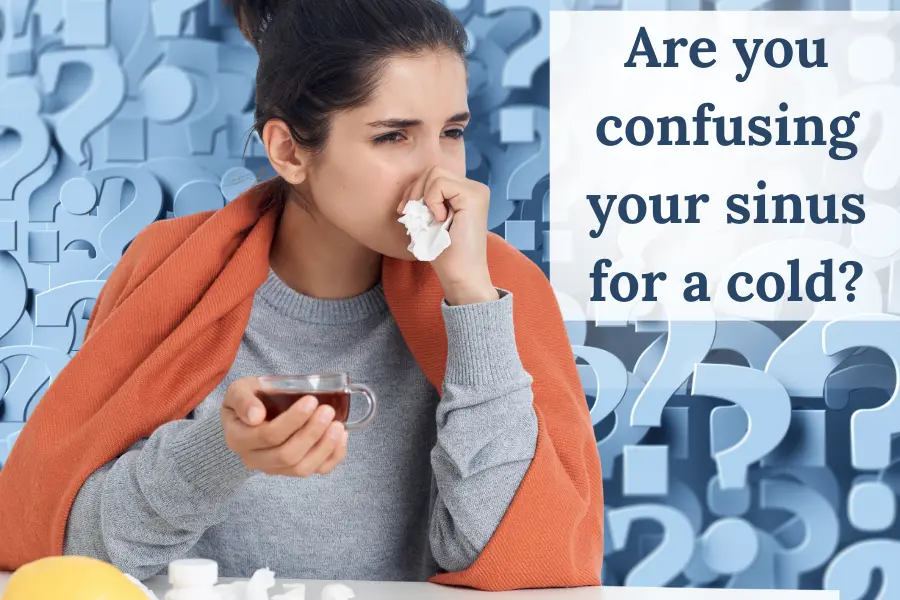
Sinusitis is the inflammation of the sinuses. When these sinuses become blocked or filled with fluid, germs can grow and cause infection. While this may start as a simple cold, many people find that their symptoms linger or keep returning. This is often because the root cause hasn’t been addressed.
Types of Sinusitis:
- Acute Sinusitis: Lasts less than 4 weeks, commonly caused by cold or allergies.
- Subacute Sinusitis: Persists 4-12 weeks, may involve bacteria.
- Chronic Sinusitis: Continues beyond 12 weeks with or without infection.
- Recurrent Sinusitis: Multiple episodes within a year.
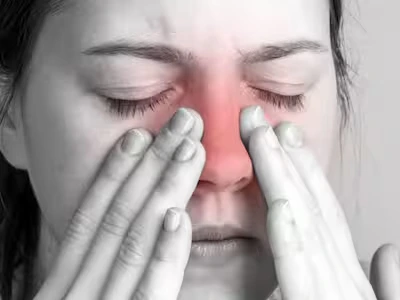
Common Symptoms Include:
- Nasal congestion or blockage
- Facial pain or pressure
- Thick nasal discharge
- Headache or heaviness
- Fatigue and post-nasal drip
These recurring issues point toward deeper imbalances.
4. An Ayurvedic Lens on Chronic Sinusitis
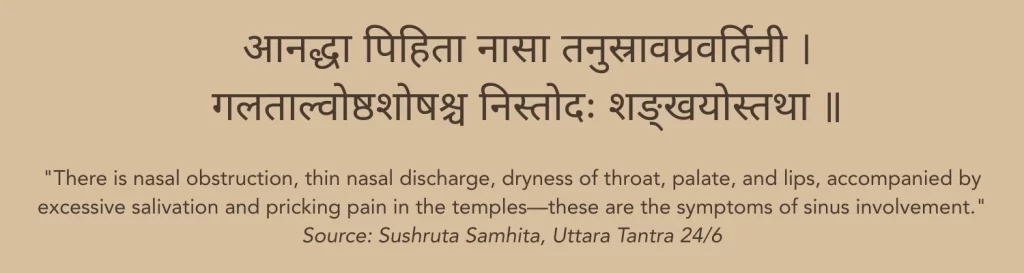
In Ayurveda, sinusitis is classified under Urdhva Jatru Vikara-diseases that affect the region above the shoulders. The head is considered a primary site for Kapha dosha accumulation, and most conditions in this area arise from the vitiation of Kapha alone or in combination with other doshas.
Ayurvedic texts describe sinus-related disorders under Nasa-gata Roga (diseases of the nose) and Shiro-gata Roga (diseases of the head). Sinusitis is often correlated with conditions such as Kaphaja Shiro Roga, Suryaavarta, and Dushta Pratishyaya-the latter being a chronic complication that develops when acute rhinitis is left untreated.
Pathology in Ayurveda:
- Begins with weak digestion (mandagni)
- Leads to accumulation of ama (undigested waste)
- Ama combines with vitiated Kapha and Vata doshas
- Leads to blockage of pranavaha srotas (channels), especially in the head (respiratory channels)
- Results in
- Shirogourava (head heaviness)
- Excess mucus (pratishyaya)
- Loss of taste or smell (aruchi, gandha jnana bhramsa)
- Sleep disturbances (nidralasya)
5. Why Antibiotics Often Don’t Work
Conventional medicine typically treats sinus infections with antibiotics. However, studies show that 90-98% of acute sinus cases are viral -not bacterial. This means antibiotics may offer temporary relief or no benefit at all.
Key Problems with Antibiotics in Sinusitis:
- Mismatch of cause and treatment: Antibiotics work against bacteria, not viruses or allergens.
- Disruption of gut microbiome: Frequent antibiotic use weakens digestion and immunity.
- Temporary suppression: They often suppress symptoms without resolving the deeper cause.
In Ayurveda, this is called “Viparita Chikitsa”– treating with the wrong method. Sinusitis isn’t just a local infection. It’s a systemic imbalance involving:
- Kapha (mucus and heaviness)
- Vata (dryness, pain, erratic symptoms)
- Mandagni (weak digestion, leading to ama or toxins)
- Obstructed srotas (blocked body channels)
So even if antibiotics kill some bacteria, the root issue remains.
6. Treatment Options: Panchakarma & Ayurvedic Therapies
Research-backed protocols demonstrate true efficacy. For instance a clinical trial on Dushta Pratishyaya showed that combining Pradhamana Nasya with Trayodashanga Kwatha achieved significant relief-up to 81.8% improvement.
sinus treatment in Ayurveda follows a multi-layered protocol. The therapies are chosen based on your body type (prakriti), the stage of the condition, and seasonal/environmental triggers.
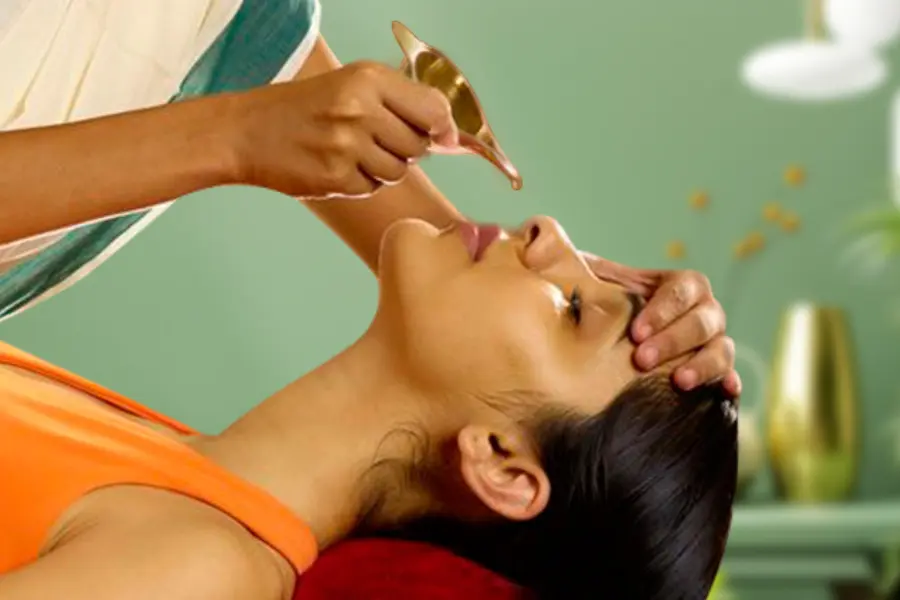
1. Nasya (Nasal Detox)
Medicated oils or herbal decoctions are instilled into the nose. This clears the nasal passages, reduces Kapha, and improves prana flow.
- Common oils: Anu Taila, Shadbindu Taila
- Benefits: Clears mucus, relieves headache, boosts memory, prevents recurrence
2. Swedana (Steam Therapy)
Herbal steam is directed toward the face and head to liquefy and drain mucus.
- Benefits: Opens blocked channels, improves circulation, soothes pain
- Customized as nadi sweda or bashpa sweda based on constitution
- Swedana therapies include:
- Pinda Sweda – herbal potli massage (Kizhi)
- Kaya Seka – warm oil pouring therapies (Pizhichil, Dhara, etc.)
- Drava Sweda – steam treatments (Nadi Sweda, steam chamber)
- Upanaha – medicated poultice or bandaging
3. Virechana (Purgation)
If Pitta or Kapha are involved systemically (e.g., allergies, skin conditions, headaches), internal cleansing through purgation is performed. In Virechana, oral medicines work internally, cleansing the body by flushing out toxins through repeated bowel movements.
- Herbs: Trivrit, Avipattikar Churna
- Benefits: Removes toxins from the gut, balances liver and metabolism
Read about Virechana in detail.
4. Ama Pachana (Digestive Detox)
We use warming herbs and diet changes to burn ama.
- Herbs: Trikatu (black pepper, long pepper, ginger), Chitrak, Pippali
- Diet: Warm, cooked meals with digestive spices like cumin, ajwain, turmeric
7. Lifestyle & Diet: Keeping Sinusitis at Bay
Daily & Seasonal Ayurvedic Tips for Sinus Care
Our body responds to seasonal shifts, diet, and daily habits. Here’s how you can protect yourself from sinusitis long-term:
Daily Care (Dinacharya):
- Oil your nostrils daily with Anu Taila (2 drops per nostril)
- Do gentle face steam with tulsi or eucalyptus
- Drink warm water with ginger or turmeric
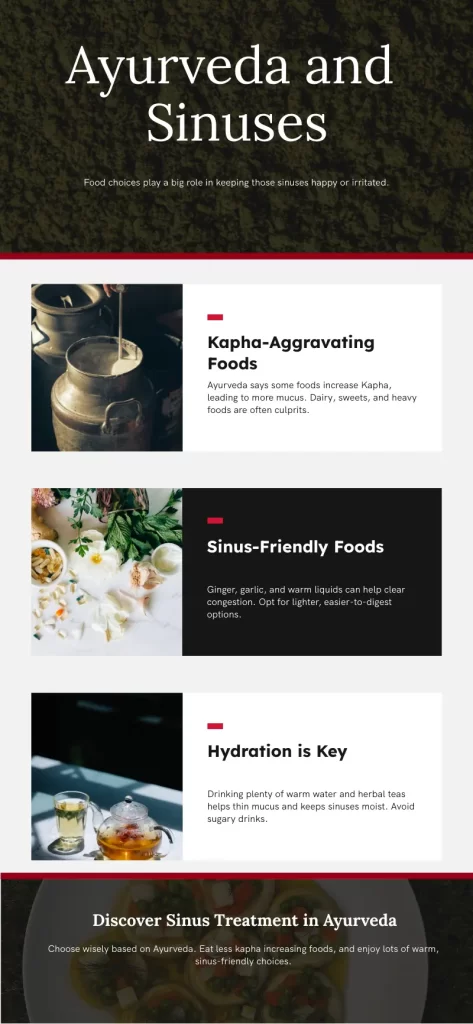
- Avoid cold drinks, curd, banana, and fried foods
Seasonal Care (Ritucharya):
- During monsoon and early winter, Kapha accumulates-reduce dairy and sweets
- Practice gentle fasting or langhana during spring to clear heaviness
- Eat light, warm, and spiced food when seasons change
8. AYURnest Approach: Personalized Healing
At AYURnest, Kolkata, we treat the whole person.
– Begin with Prakriti and pulse-based diagnosis
– Administer therapies -Nasya, Swedana, Virechana – under doctor supervision
– Integrate lifestyle guidance and herbal support
– Focus on long-term restoration, not just short-term relief
9. Breathe Easy the Ayurvedic Way
Sinus treatment in Ayurveda is not just an alternative. It’s a time-tested, personalized, and holistic system that works with your body-not against it.
Why Choose AYURnest:

- Experienced BAMS doctors who design individualized plans
- Focus on root cause, not symptomatic treatment
- Proven track record of patients recovering from chronic sinus without recurrence
- In-house pharmacy for safe and genuine Ayurvedic medicine.
At AYURnest, where we practice authentic Ayurveda and Panchakarma in Kolkata, this triad forms the foundation of every personalized treatment plan. No matter what the condition-joint pain, skin disorders, hormonal imbalances-restoring these three pillars is the first step to lasting recovery.
Explore personalized Ayurveda with AYURnest in Kolkata Book a consultation
Learn more about Panchakarma in Kolkata