
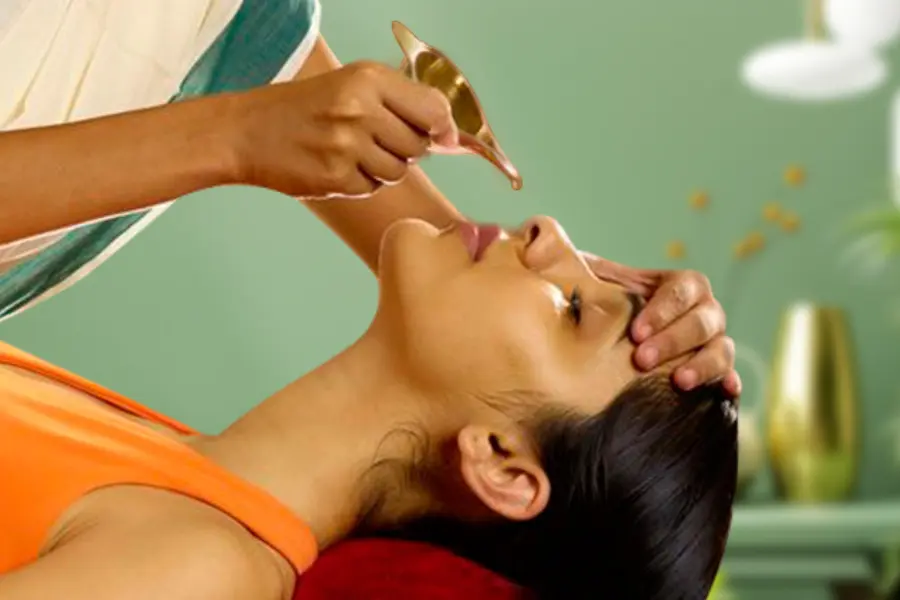
Nasya for sinus panchakarma therapy kolkata
If you’ve ever struggled with blocked sinuses, recurring colds, or a constant feeling of heaviness in the head, Ayurveda has a time-tested Panchakarma therapy called Nasya for Sinus. Simply put, it is the practice of instilling medicated oils or herbal preparations into the nostrils. This might sound simple, but in Ayurvedic science, it is considered one of the five main Panchakarma therapies, with profound effects on sinus health, respiratory function, and even mental clarity.
In this blog, we’ll explore how Nasya for sinus works, what classical Ayurvedic texts say about it, and what modern research has found.
What Is Nasya Karma?
Nasya [as described in Charaka Samhita (Siddhi Sthana 9/88-89)] as a therapy where the nose is considered the ‘gateway to the head’ (“Nasa hi shiraso dwaram”). In fact, by administering medicine through the nostrils, Nasya directly influences the organs and tissues of the head. As a result, it benefits not only the sinuses but also the brain and the respiratory tract.
Types of Nasya include:
On the basis of functionality, there are 3 types of Nasya:
1. Shodhana Nasya- cleansing Nasya to expel toxins (for chronic sinusitis, headaches).
2. Snehana Nasya- reduce dryness and irritation in nasal passages, eases breathing, and prepares the channels for cleansing treatments like Shodhana Nasya.
3. Shamana Nasya- pacifying Nasya to balance aggravated doshas (for allergies, mild sinus congestion).
4. Brimhana Nasya- nourishing Nasya (for dryness, weakness).
On the basis of the content used:
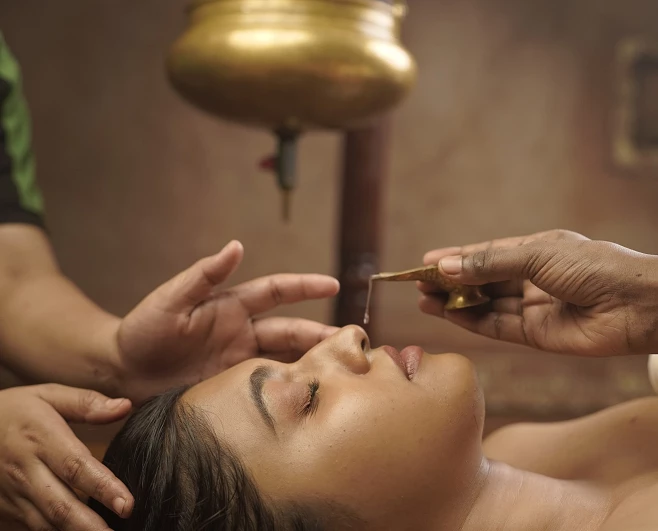
- Navana Nasya – Navana is one of the most important and widely practiced therapies under Nasya Karma. The physician instills drops of medicated oil or Ghrita (ghee) into the nostrils. Depending on the herbs used and the dosage prescribed, Navana can act either as Snehana Nasya (lubricating) or Shodhana Nasya (purifying).
- Avapida Nasya – Avapida is a type of Shodhana Nasya. In this procedure, the physician administers fresh herbal juice (Swarasa) or a paste (Kalka) of specific herbs through the nostrils. Ayurveda recommends preparing the Kalka with Tikshna (sharp/potent) and Stambhana (astringent) substances, which provide both purifying (Shodhana) and astringent (Stambhana) actions.
- Dhumapana Nasya – Also known as Pradhamana Nasya, this is a specialized form of Shodhana Nasya. The practitioner introduces finely powdered medicine (Churna) into the nostrils using a special instrument called Nadiyantra, while positioning the patient with the head lowered. Ayurveda especially recommends this therapy in chronic sinusitis (Dushta Pratishyaya).
- Dhuma Nasya – In this therapy, the patient inhales medicated fumes through the nostrils and expels them through the mouth. Although widely practiced for nasal and respiratory health, Acharya Sushruta did not classify Dhuma Nasya as a formal subtype of Nasya.
- Marsha-Pratimarsha Nasya – Both involve introducing medicated oil through the nostrils. Pratimarsha Nasya uses a mild dose of 1-2 drops and is suitable for daily practice, while Marsha Nasya uses a larger dose of 6-10 drops for deeper therapeutic action. Patients tolerate both procedures well, and they are considered highly convenient forms of Nasya therapy.
How Nasya Helps in Sinus Problems
Ayurveda says sinusitis is closely linked with Kapha dosha imbalance. Excess Kapha leads to congestion, heaviness, runny nose, and blockages. Nasya directly works on this imbalance.
Benefits of Nasya for Sinus:
1. Clears Blocked Sinuses – Medicated oils loosen thick Kapha secretions and improve drainage.
2. Reduces Inflammation – Herbs like Anu Taila have anti-inflammatory effects on nasal passages.
3. Improves Breathing – Opening nasal pathways, results in an increase in oxygen intake.
4. Prevents Recurrence – Regular Nasya strengthens nasal tissues, reducing the frequency of sinus infections.
5. Enhances Mental Clarity – There are studies that show improved alertness and reduced heaviness of head.
Modern Research on Nasya for Sinus
Several studies have explored the efficacy of Nasya in sinusitis:
• A 2022 randomized clinical trial showed that Nasya with Anu Taila significantly improved symptoms of chronic sinusitis, including nasal blockage and headache, compared to a control group.
• Another study published in the Journal of Ayurveda and Integrative Medicine (2018) found that Nasya therapy reduced both subjective symptoms (congestion, sneezing) and objective parameters (nasal resistance) in sinusitis patients.
How Nasya Is Done (Step-by-Step)
1. Preparation (Purvakarma) – Gentle oil massage (Snehan) and steam (Swedana) are done to loosen Kapha.
2. Main Procedure (Pradhana Karma) – Medicated oil (like Anu Taila, Shadbindu Taila) is warmed and instilled into both nostrils (usually 6-8 drops).
3. Post-Procedure (Paschat Karma) – Patient rests, spits out loosened mucus, and avoids exposure to dust or cold air.
“Important: Nasya must be done under the supervision of an Ayurvedic physician.“
Who Should Consider Nasya for Sinus?
Nasya is particularly beneficial for:
• Chronic sinusitis sufferers
• People with frequent colds, allergies, or nasal blockages
• Those with headaches or heaviness due to sinus congestion
• Professionals exposed to pollution or dust
Precautions and Contraindications
• Not recommended during acute fever, pregnancy, or immediately after meals.
• Children below 7 and elderly above 80 should avoid unless prescribed.
• Should only be performed after an Ayurvedic consultation for correct oil and dosage.
Conclusion
Nasya Karma is more than just a nasal cleanse-it is a holistic therapy for sinus health. By addressing the root cause (Kapha imbalance), it not only clears congestion but also prevents recurrence and strengthens immunity.
If you are struggling with sinus symptoms that don’t improve with antibiotics or over-the-counter sprays, it may be time to explore Nasya for sinus under the guidance of an experienced Ayurvedic doctor.
Breathe Free with Ayurveda
Sinus treatment in Ayurveda is not just an alternative. It’s a time-tested, personalized, and holistic system that works with your body-not against it.
Why Choose AYURnest:

- Experienced BAMS doctors who design individualized plans
- Focus on root cause, not symptomatic treatment
- Proven track record of patients recovering from chronic sinus without recurrence
- In-house pharmacy for safe and genuine Ayurvedic medicine.
At AYURnest, where we practice authentic Ayurveda and Panchakarma in Kolkata, this triad forms the foundation of every personalized treatment plan. No matter what the condition-joint pain, skin disorders, hormonal imbalances-restoring these three pillars is the first step to lasting recovery.
Explore personalized Ayurveda with AYURnest in Kolkata
Book a consultation
Learn more about Panchakarma in Kolkata