7 Powerful Ayurvedic Treatment for Eye Disorders: A Classical Perspective
June 7, 2026
Modern vs Ayurvedic Treatment for Spondylitis in Kolkata: What Works Long-Term?
July 15, 2026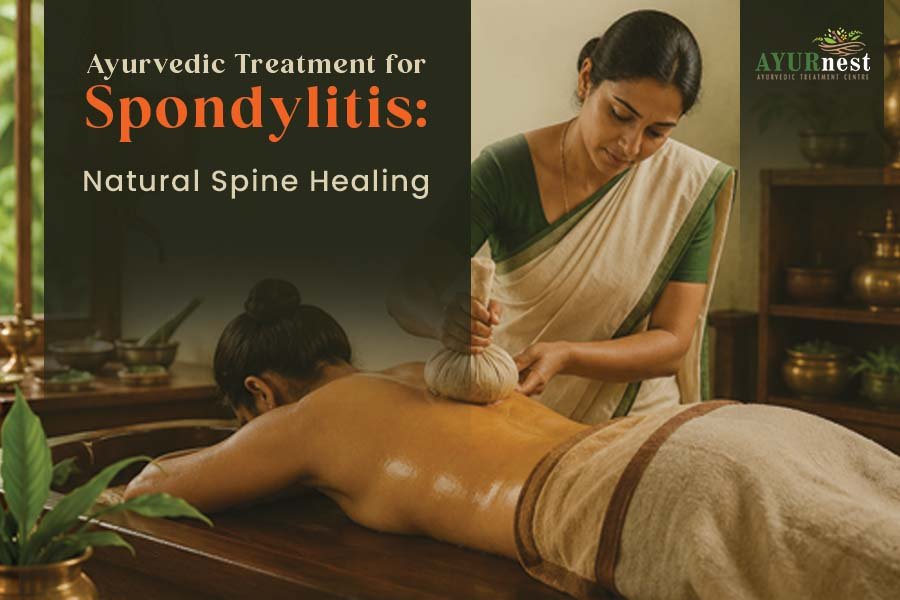
Ayurvedic Treatment for Spondylitis: A Complete Guide to Natural Spine Healing
Table of Contents
- Introduction
- What is Spondylitis? (Modern & Ayurvedic View)
- Types of Spondylitis
- Root Cause: Vata Imbalance Explained
- Symptoms and Early Warning Signs
- Ayurvedic Diagnosis (Nidana & Samprapti)
- Ayurvedic Treatment for Spondylitis
- Diet & Lifestyle (Pathya-Apathya)
- Yoga & Daily Practices
- Scientific Evidence Supporting Ayurveda
- Practical Tips to Manage Spondylitis
- Conclusion
1. Spondylitis Explained: Understanding the Condition
Spondylitis has emerged as a major lifestyle disorder affecting millions globally, especially among working professionals. Chronic neck pain, stiffness, and restricted mobility are no longer age-related issues, they are consequences of sedentary routines and postural stress.
The Ayurvedic treatment for spondylitis offers a fundamentally different approach. Instead of suppressing symptoms, it focuses on restoring internal balance, nourishing tissues, and preventing degeneration.
2. What Causes Spondylitis? Ayurvedic and Modern Insights
In modern medicine, spondylitis refers to inflammation or degeneration of the vertebral column, often involving intervertebral discs and surrounding structures.
Ayurveda correlates this condition with Vata Vyadhi – a group of disorders caused by aggravated Vata dosha. Classical texts like the Charaka Samhita describe how Vata imbalance leads to “dhatu kshaya” (tissue depletion) and joint degeneration (Charaka Samhita, Sutrasthana 12).
3. 3 Types of Spondylitis: From Cervical to Ankylosing
1. Cervical Spondylitis (Neck Region)
This is the most common form, especially among professionals with prolonged screen exposure. It affects the cervical spine (neck area), where degeneration of discs and compression of nerves leads to:
- Neck stiffness and pain
- Headaches and dizziness
- Tingling or numbness in shoulders and arms
From an Ayurvedic perspective, this condition is linked to Vata imbalance in the “Greeva Pradesh” (neck region). Lack of lubrication and tissue depletion (dhatu kshaya) leads to nerve irritation.
Often associated with poor posture and stress, making it a classic lifestyle disorder.
2. Lumbar Spondylitis (Lower Back)
This type affects the lower spine and is commonly seen in individuals with sedentary lifestyles or those involved in heavy lifting.
Symptoms include:
- Persistent lower back pain
- Difficulty bending or standing for long periods
- Pain radiating to legs (sciatica-like symptoms)
In Ayurveda, this condition relates to Vata aggravation in the “Kati Pradesh” (lower back). It often involves deeper tissues like Asthi dhatu (bones) and Majja dhatu (nervous system).
This is where therapies like Kati Basti become highly effective.
3. Ankylosing Spondylitis (Chronic Inflammatory Type)
A more severe and progressive form, ankylosing spondylitis is an autoimmune condition where inflammation causes the vertebrae to fuse over time.
Key features:
- Chronic stiffness, especially in the morning
- Reduced spinal flexibility
- Postural changes (forward bending spine)
Ayurveda correlates this with “Amavata” or advanced Vata disorders, where toxins (Ama) combine with aggravated Vata, leading to inflammation and rigidity.
Requires a deeper detoxification approach (Panchakarma) along with long-term management.
While modern medicine categorizes spondylitis by location, Ayurveda focuses on dosha imbalance and tissue degeneration. Across all types:
- Primary Dosha: Vata
- Affected Tissues: Asthi (bone), Majja (nerves)
- Pathology: Dryness → Degeneration → Pain → Restricted movement
This unified understanding allows the Ayurvedic treatment for spondylitis to address the root cause rather than just the affected area.
4. The Ayurvedic Root Cause: Vata Imbalance and Spine Health
Vata dosha governs movement, nerve impulses, and lubrication. When aggravated, it causes:
- Dryness in joints
- Degeneration of discs
- Pain and stiffness
Factors contributing to Vata imbalance include:
- Irregular eating habits
- Excessive travel or sitting
- Stress and lack of sleep
- Cold and dry environmental exposure
This explains why back pain Ayurveda treatments always emphasize warmth, nourishment, and routine.
5. 5 Signs and Symptoms of Spondylitis You Shouldn’t Ignore
As described in classical texts, “Vata, when vitiated, produces pain, stiffness, and restriction of movement” (Charaka Samhita, Sutrasthana 20).
- Chronic neck or back pain
- Tingling or numbness
- Reduced flexibility
- Pain aggravated by cold weather
- Stiffness after rest
What makes these early symptoms critical is their progressive nature. Many individuals experiencing these symptoms begin searching for back pain Ayurveda treatment in Kolkata, often after conventional relief methods fail.
6. Ayurvedic Diagnosis of Spondylitis (Nidana & Samprapti)
Ayurveda evaluates disease through:
- Nidana: This is the identification of triggers, which often include prolonged sitting, irregular eating habits, excessive physical or mental strain, and exposure to cold environments.
- Dosha involvement: It evaluates the state of the doshas, the integrity of tissues (dhatus), and the functioning of bodily channels (srotas).
- Dushya (Affected tissues): In spondylitis, the dominant disturbance lies in Vata, affecting primarily the Asthi dhatu (bone tissue) and Majja dhatu (nervous system).
The disease progression (Samprapti) involves Vata aggravation leading to degeneration and obstruction in spinal channels. This holistic diagnostic approach is followed at specialized Ayurveda clinics in Kolkata, where treatment is tailored to individual constitution.
7. Ayurvedic Treatment for Spondylitis in Kolkata
The Ayurvedic treatment for spondylitis focuses on reversing Vata imbalance and strengthening the spine.
Panchakarma Therapies for Spondylitis Relief
- Abhyanga: help improve circulation, reduce stiffness, and nourish tissues.
- Basti: Considered the most effective therapy for Vata disorders (Charaka Samhita, Siddhi Sthana 1)
- Kati Basti / Greeva Basti: Localized treatments deliver warm medicated oils directly to affected areas, providing both relief and rejuvenation. [https://pmc.ncbi.nlm.nih.gov/articles/PMC11388008/]
Ayurvedic Herbal Medicines for Spine Health
Herbal support further enhances healing
- Ashwagandha: Strengthens muscles and nerves
- Dashmool: Anti-inflammatory and Vata balancing
- Guggulu formulations: Support joint health
Personalized Panchakarma therapies available in Kolkata-based Ayurveda centers play a crucial role in long-term recovery.
8. Diet and Lifestyle for Spondylitis (Pathya & Apathya Guide)
In Ayurveda, healing does not end with therapy – it is sustained through daily living. Diet and lifestyle, collectively known as Pathya-Apathya, are not supplementary but foundational to recovery.
✔ Recommended
- Warm, freshly cooked meals
- Ghee and healthy fats
- Regular routine
❌ Avoid
- Cold, dry, processed foods
- Late nights
- Excess screen time
Diet plays a critical role in maintaining spine health Ayurveda emphasizes. To understand in detail, you can read this research paper. [https://jaims.in/jaims/article/view/1411/1462]
9. Yoga and Daily Ayurvedic Practices for a Healthy Spine
- Bhujangasana (Cobra pose)
- Makarasana (Crocodile pose)
- Pawanmukthasana
- Gentle stretching routines
These improve flexibility and complement Ayurvedic therapies. [https://pmc.ncbi.nlm.nih.gov/articles/PMC11388008/]
10. Scientific Evidence Supporting Ayurvedic Treatment for Spondylitis
Recent studies increasingly support the effectiveness of traditional Ayurvedic approaches in managing spinal disorders. A 2020 study published in the Journal of Ayurveda and Integrative Medicine reported significant improvements in pain intensity, functional ability, and quality of life among patients with chronic low back pain undergoing Ayurvedic therapies (Telles et al., 2020). These findings highlight the potential of Ayurveda as a viable, non-invasive treatment option for long-term pain management.
In addition, research on Panchakarma therapies suggests that these interventions may help reduce inflammation, improve circulation, and enhance mobility. By addressing both the underlying imbalance and symptomatic discomfort, such therapies align closely with modern understandings of holistic and integrative care.
“The growing body of evidence around Ayurveda reflects not a rediscovery, but a validation of principles that have guided healing for thousands of years.”
11. Practical Tips to Manage Spondylitis in Daily Life
Follow the 30-Minute Rule
Try to stand, stretch, or take a short walk every 30 minutes. Even a quick posture reset improves blood flow and reduces stiffness.
Fix Your Posture, Not Just Your Chair
Sit with your back straight, shoulders relaxed, and feet flat on the ground. Keep your screen at eye level to avoid bending your neck forward.
Build Core Strength for Spinal Support
A strong core acts like a natural brace for your spine. Include stretching, yoga, or light strength exercises in your routine to improve stability and reduce the risk of recurring pain.
Upgrade to an Ergonomic Workspace
Your chair and desk setup matter more than you think. Use:
- A chair with proper lumbar support
- A desk at the correct height
- A screen positioned to avoid neck strain
These small adjustments can significantly reduce daily spinal stress.
Maintain a Healthy Weight
Excess weight especially around the abdomen puts extra pressure on the lower spine, increasing the risk of pain and degeneration over time. Balanced nutrition and regular movement go a long way.
Manage Stress to Reduce Tension
Stress often shows up physically as tight neck and back muscles. Simple practices like deep breathing, meditation, and quality sleep can help lower inflammation and prevent flare-ups.
Why People in Kolkata Are Choosing Ayurveda for Spondylitis
Spondylitis is not just a structural issue – it is a systemic imbalance. The Ayurvedic treatment for spondylitis offers a comprehensive healing approach through therapies, herbs, and lifestyle changes. Unlike painkillers that provide temporary relief, Ayurveda:
- Addresses root cause
- Prevents recurrence
- Strengthens tissues
This makes it a sustainable approach for chronic conditions and a long term resilience plan. For those seeking effective Ayurvedic treatment for spondylitis in Kolkata, therapies are designed to reverse Vata imbalance and restore spinal health.